


By Dr. Neha Gera, Homoeopathic Physician
PCOD, or Polycystic Ovarian Disease, can have a significant impact on young women, not only because of its physical symptoms but also because of the effect it can have on confidence and emotional well-being.
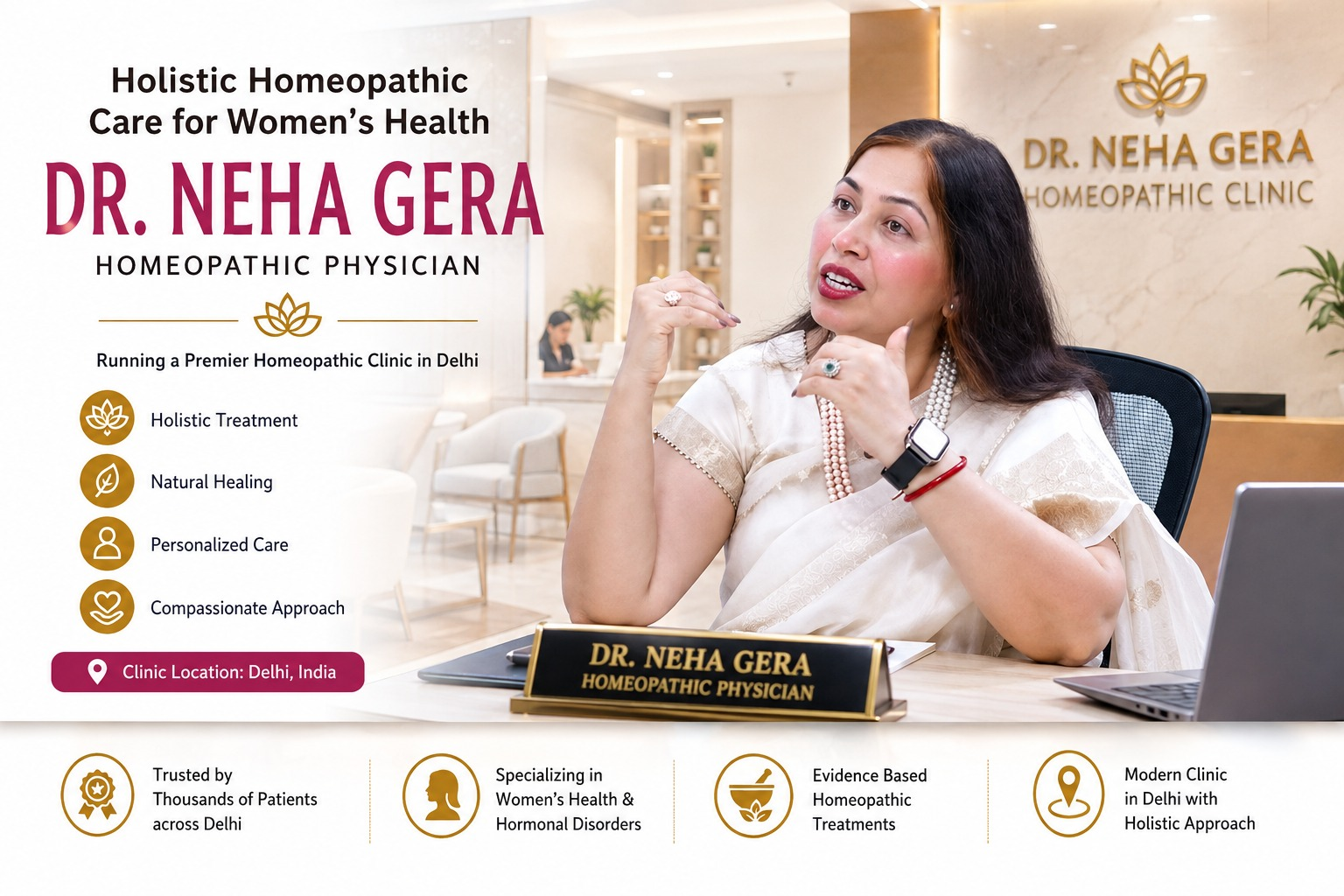
In this video, Dr. Neha Gera discusses PCOD in young women, particularly those between the ages of 16 and 28, and explains the different ways in which the condition can affect their lives.
PCOD is associated with hormonal imbalance, which can manifest in several ways. Dr. Neha Gera discusses some of the concerns commonly seen in young women with PCOD, including:
These changes can be difficult for a young woman to deal with. The physical symptoms themselves can affect confidence, while concerns about appearance and menstrual health may add to the emotional burden.
According to Dr. Neha Gera, an important part of approaching PCOD is to look beyond individual symptoms.
The treatment approach discussed in the video is based on understanding the condition as a broader imbalance rather than simply concentrating on one symptom at a time.
She explains her holistic homeopathic approach, which combines homeopathic medicines with other aspects of care.
The approach discussed by Dr. Gera includes homeopathic medication, detox protocols, dietary adjustments and counselling.
The objective described in the video is to work towards restoring the body's natural rhythm, improving metabolism and enhancing immunity.
Lifestyle also forms an important part of this approach. Dr. Gera emphasizes the importance of exercise and a structured lifestyle, along with dedicated treatment.
One of the strongest messages in the video is directed towards women who may feel discouraged by their PCOD journey.
PCOD can affect a woman's physical appearance and, consequently, her confidence. Concerns such as acne, facial hair, weight gain and hair fall can make women feel less confident about themselves.
Dr. Neha Gera encourages women not to lose hope and to approach their health journey with confidence, commitment and persistence.
The journey may require time and dedication, and every individual's experience is different. A structured approach to treatment and lifestyle can be an important part of working towards better health and well-being.
PCOD is not only about irregular periods or hormonal changes. As discussed in the video, it can influence several aspects of a young woman's physical and emotional well-being.
Dr. Neha Gera's message is therefore to look at the woman as a whole and not focus only on isolated symptoms. Her approach combines homeopathic treatment, dietary adjustments, lifestyle changes, exercise and counselling.
Most importantly, women dealing with PCOD should not lose confidence in themselves. The PCOD journey requires patience, commitment and persistence.
About Dr. Neha Gera
Dr. Neha Gera is a Homoeopathic Physician who discusses women's health and provides an individualized, holistic approach to care.
Website: www.drnehagera.com
Medical Disclaimer
This article is based on the discussion presented in the accompanying video and is intended for general educational and informational purposes. It should not be considered a substitute for individual medical advice, diagnosis or treatment. PCOD can affect individuals differently, and appropriate professional evaluation is important. Do not start, stop or change any prescribed treatment without consulting your treating healthcare professional.
Powered By

Copyright © 2026 Dr Neha Gera, All Rights Reserved.


