


By Dr. Neha Gera
PCOD (Polycystic Ovarian Disease), weight gain and hypothyroidism are often seen together. In this video, Dr. Neha Gera discusses this connection and explains the approach she follows for managing these concerns through homeopathy, diet and lifestyle changes.
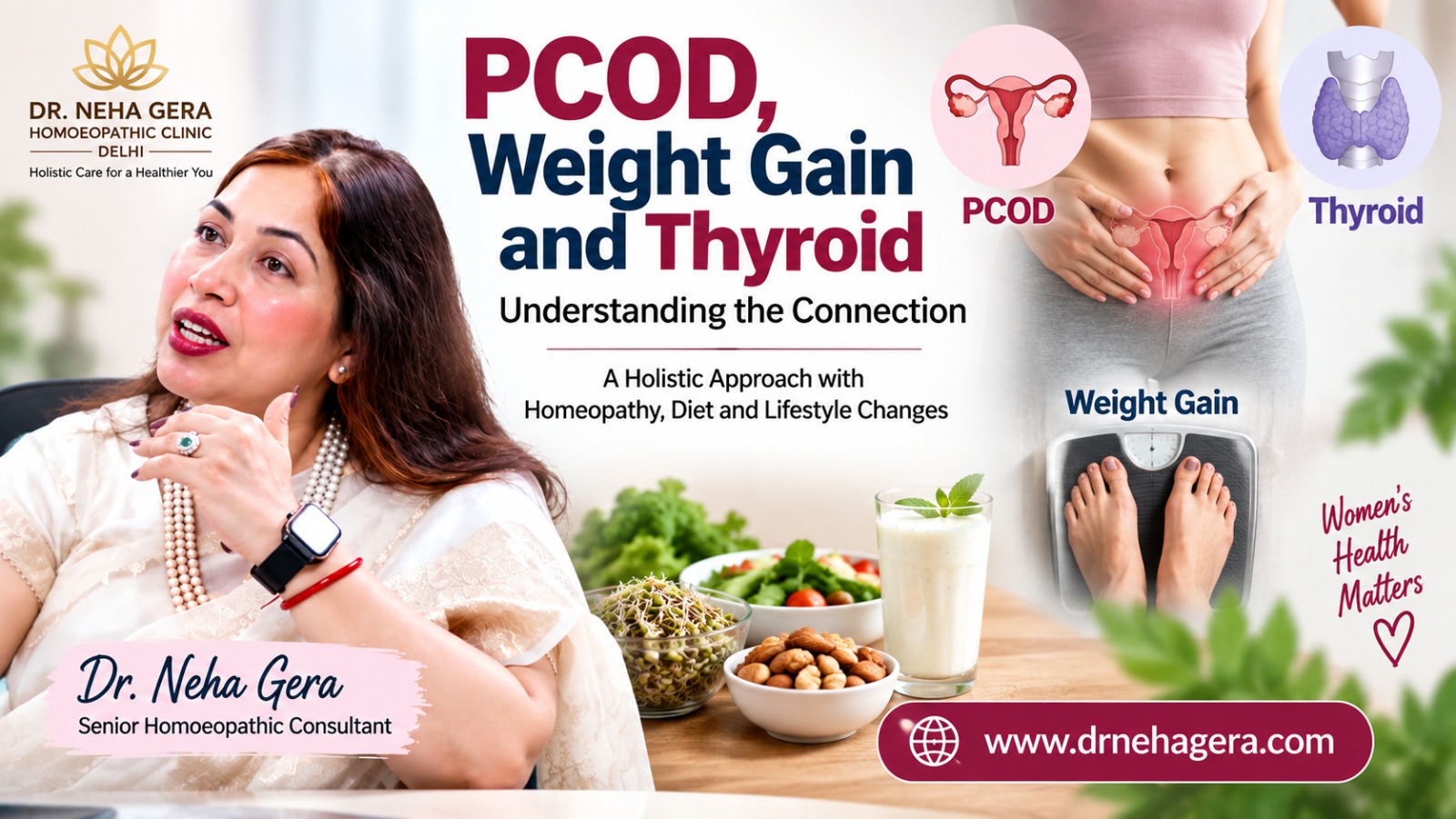
According to Dr. Gera, PCOD can be associated with weight gain, abdominal bloating and water retention. Irregular or scanty periods may also occur along with these symptoms.
The approach discussed in the video focuses on regulating menstrual cycles and improving metabolic activity through homeopathic treatment.
Dr. Gera also discusses the frequent association between PCOD and hypothyroidism.
She raises concerns about long-term dependence on synthetic thyroid hormone medicines such as Thyronorm and discusses possible concerns including osteoporosis or osteopenia. The video explains her approach of using homeopathic medicine as an alternative for managing these conditions.
Diet and lifestyle changes form an important part of the approach discussed in the video.
Dr. Gera recommends eating small portions at regular intervals rather than having large meals. She explains that regular meals help prevent the body from entering what she describes as "starvation mode" and help keep metabolism active.
The foods discussed include:
She also advises being mindful about eating sweets and fruits at night, explaining that these are more likely to be stored as fat.
Dr. Gera emphasizes that medication alone is not the focus. The approach discussed combines treatment with dietary and lifestyle changes.
The objective is to work towards permanent weight management rather than a temporary reduction in weight.
For women dealing with PCOD, weight gain and thyroid-related concerns, the video provides an overview of how these issues can be considered together rather than as completely separate problems.
Disclaimer
This article is based strictly on the content discussed in the video and is provided for general educational purposes. It should not be considered a substitute for individual medical advice, diagnosis or treatment. Any changes to prescribed medication should be made only in consultation with the treating healthcare professional.
Powered By

Copyright © 2026 Dr Neha Gera, All Rights Reserved.


